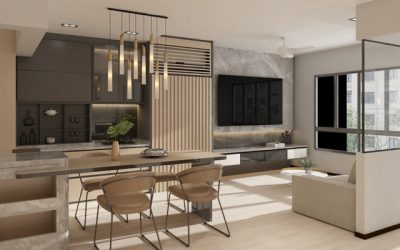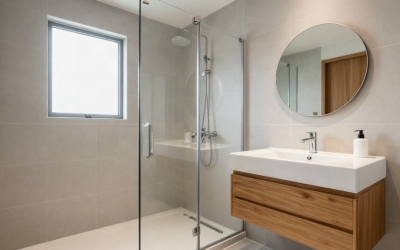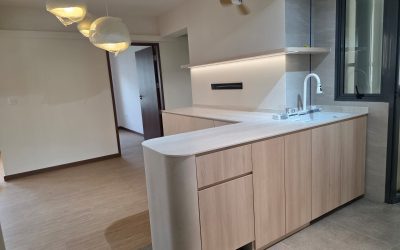
If you have spent even one weekend browsing kitchen photos, you have probably noticed that everyone has an opinion. One friend swears by plywood. Another insists laminate is all you need. A third sends you a photo of a sintered stone countertop and says nothing else will survive a family that cooks every day.
Here is the reassuring part: none of them are wrong. They are just answering different questions. Kitchen cabinet materials in Singapore get judged on three things at once – cost, durability and daily upkeep – and no single material wins on all three. What matters is which combination fits how you actually cook, and how much you want to spend.
This guide compares plywood, laminate and sintered stone side by side, with an honest look at what each one does well, where it struggles in our climate, and how to match them to a mid-range budget without ending up with a kitchen that feels cheap.
Start With the Part Nobody Talks About
Most homeowners compare finishes. The professionals compare layers. A kitchen cabinet is really two things stacked together: the carcass, which is the box that holds everything up, and the door or surface finish, which is what you see and touch every day.
The carcass decides whether your cabinets stay square after five years of humidity and heavy pots. The finish decides whether your kitchen still looks fresh after five years of oil splatter and wiping down.
That is why the most useful question is not “plywood or laminate?” but “which carcass, with which finish, in which zone of my kitchen?” Once you think that way, a mid-range kitchen can be specified to last like a premium one.
Plywood: The Carcass Standard Worth Paying For
Plywood is made of thin wood veneers glued in alternating directions. That cross-grain structure is what makes it resist warping when moisture moves in and out – which, in Singapore, it constantly does.
Solid EcoPlyWood carcasses are the sensible baseline for wet kitchen cabinets. They hold screws well, so hinges and drawer runners stay tight instead of slowly loosening, and they cope far better with the steam and splashes of daily wok cooking than particle board does.
Where plywood needs care: raw exposed edges should be properly sealed, and the material costs more than chipboard. That extra cost is usually the smallest premium in the whole renovation and the one you will notice least in the short term and most in the long term.
If your budget only allows one upgrade, upgrade the carcass before the door. Nobody sees the box, but everybody feels it when a door starts to sag.
Laminate: The Most Practical Finish for Mid-Range Kitchens
Laminate is a thin, hard-wearing sheet pressed onto the cabinet door or carcass. It comes in an enormous range of colors and textures, including convincing woodgrains and soft matte finishes, and it wipes clean with a damp cloth.
For a mid-range kitchen, laminate is hard to beat on value. It is affordable, easy to maintain, and forgiving of busy households. High-pressure laminate with ABS edge trimming on the door edges is the specification to ask for – ABS edges resist chipping and yellowing better than thin PVC tape, which is exactly where cheaper cabinets start to look tired first.
Laminate’s limits are heat and blunt force. Do not rest a hot pan directly on a laminate surface, and accept that sharp knocks at corners can leave a mark. Inside a wet kitchen, choose a laminate that suits the zone rather than a delicate high-gloss finish that shows every fingerprint.
A useful rule: spend on laminate doors with good hardware, not on a fancier finish with flimsy hinges. Soft-closing hinges and slow-closing drawers change how a kitchen feels far more than a glossy surface does.
Sintered Stone: Where the Premium Payoff Actually Lives
Sintered stone is manufactured under extreme heat and pressure, which makes it dense, non-porous and highly resistant to scratches, stains and heat. It does not need sealing, it does not absorb oil, and it handles a hot pot with far more composure than most surfaces.
The catch is cost and weight. A full sintered stone kitchen is rarely a mid-range line item, which is why the smart approach is selective placement.
Put sintered stone where the cooking happens – the wet kitchen countertop around your sink and cooker, where heat, oil and knife work concentrate. Keep laminate or a more modest finish on the cabinet doors above and below. You get the durability where it counts without paying premium prices on surface area that only ever sees a cupboard door close.
That is also how a mid-range kitchen can look premium: one strong, expensive-looking material placed deliberately, surrounded by calm, well-finished basics.
A Side-by-Side Comparison
On cost, laminate doors sit at the bottom, plywood carcasses in the middle, and sintered stone at the top for countertops. On durability against humidity, plywood carcasses and sintered stone both do well, while laminate depends heavily on edge quality. On daily upkeep, laminate and sintered stone are equally easy – a damp cloth and a mild cleaner. On heat resistance, sintered stone wins clearly, with laminate the weakest of the three. On repairability, laminate is the simplest to replace door by door, while sintered stone is difficult to repair but rarely needs it.
Matching Materials to Your Budget
If your budget is tight, put solid plywood carcasses in the wet kitchen, keep laminate doors simple and matte, and choose mid-range hardware. Skip the premium countertop for now – it is the easiest item to upgrade later.
If you have some room to move, do exactly the above and add a sintered stone countertop at the sink and cooker. This is the single change that most improves how premium the kitchen feels and how well it survives a decade of cooking.
If you cook heavily and entertain often, add a glass partition or a well-planned wet kitchen layout so the social side of your kitchen stays cool and clean while the heat and oil stay contained.
What to Ask Before You Sign
Ask three questions of any quote. What is the carcass material, and is it solid plywood throughout or only on the visible panels? What edge trimming do the doors use? And is the countertop included, and in which material and thickness?
A transparent quote with a line-by-line cost breakdown is the clearest signal that a contractor is being straight with you. When materials are named openly, you can compare apples to apples instead of guessing why one quote is $2,000 cheaper.
The Calm Way Forward
You do not need the most expensive material in the showroom. You need the right material in the right place, quoted clearly, installed by the people who built it.
Direct in-house carpentry matters more than most homeowners expect. When the workshop and the project team are the same company, specifications do not quietly change between the quote and the delivery, and there is one team to call if a hinge ever needs adjusting.
If you would like to see how these combinations look in a real HDB flat, start with a conversation. We will walk you through carcass options, door finishes and countertop placement, and give you a breakdown you can actually read – so the kitchen you choose on paper is the kitchen you live in for years.